











More than 2 billion people lack reliable sources of safe drinking water, with only 14 percent of rural households in low- and middle-income countries enjoying tap water in their homes. Even when the pipes do exist, the water it provides is often just as contaminated as local ground- and surface-water sources. As such, universal access to clean water remains one of the world’s most pressing public health challenges. A new study in rural India proposes an inexpensive, effective, and simple solution: localized treatment of water coupled with doorstep delivery.
“Our research shows that the goal of providing tasteless and safe drinking water that is also convenient to access can be achieved without relying on expensive pipe infrastructure,” says study co-author Fiona Burlig, an assistant professor at the Harris School of Public Policy. “The approach we tested appears to be economically sustainable, with people willing to pay more than previously thought, and it delivered measurable health benefits for a population where waterborne diseases remain a significant threat. With the right incentives, simple water treatment and delivery could become a key tool to providing universal access to clean drinking water.”
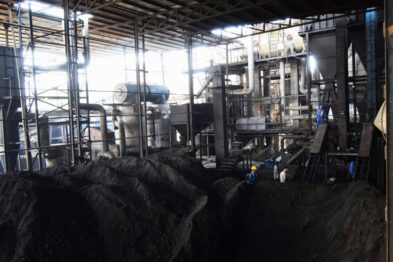
Burlig and her co-authors, Harris Public Policy Assistant Professor Amir Jina and University of Warwick Professor Anant Sudarshan, partnered with Spring Health Water—a local business whose water treatment plants are powered using solar energy—to test this idea through an experiment that covered 60,000 households in 120 villages in Odisha, India—one of the poorest areas of the country. The researchers created three different contracts to figure out how much people valued water: 1) some households paid for home-delivered water at varying prices; 2) some received a set amount of free bottled water each month; 3) some were given a water entitlement but, if they chose not to use all of it, they could instead receive a cash rebate.
At low prices, about 90 percent of households chose to order clean water, a number far above the 40-50 percent take-up rates of alternatives such as chlorine tablets—which have proved persistently unpopular even when given away, perhaps because of taste and inconvenience. As prices rose, demand dropped, but even at high prices, households that bought water did so in large enough quantities to cover their drinking needs. And although only a small number of households were willing to pay high prices out of pocket, very few of those who were given an entitlement swapped it for cash even when rebates were high. By this measure of valuation—how much money would it take for you to give up your water entitlement—households value water far more than their low interest in solutions such as chlorine treatment might lead us to believe. The researchers estimate a valuation of more than $4.73—around 4 percent of total expenditures—a month, enough to cover costs of supply.
Clean water seemed to deliver health benefits. The study did not carry out clinical assessments but did ask households to report on illness or missed work. Drinking treated water improved these metrics, with households reporting less sickness and fewer absences from work. Households also said it saved time, as household members did not need to spend as much time collecting water from wells and fuelwood to boil it.
The study also measured how cost-effective clean water delivery was, especially in comparison to chlorine tablets used to treat water at home. Although chlorine is cheaper on a per capita basis, numerous studies have repeatedly found far lower take-up rates compared to the 90 percent take from clean water delivery. As such, the study concludes that while home delivered water and chlorine tablets are both highly cost-effective ways to improve health, home delivery of water may provide even greater benefits overall.
“We suggest that one approach to bringing clean water to the poor is to literally deliver it to them. Small rural companies are increasingly providing this service but not at prices that most households can afford,” says Anant Sudarshan. “We show that households value safe water and can afford it at discounted prices, suggesting that government subsidies or vouchers may be a good idea. We all look forward to a day when we have clean piped water in every home, but until we get there, this idea seems a highly promising solution to one of today’s biggest public health challenges.”